
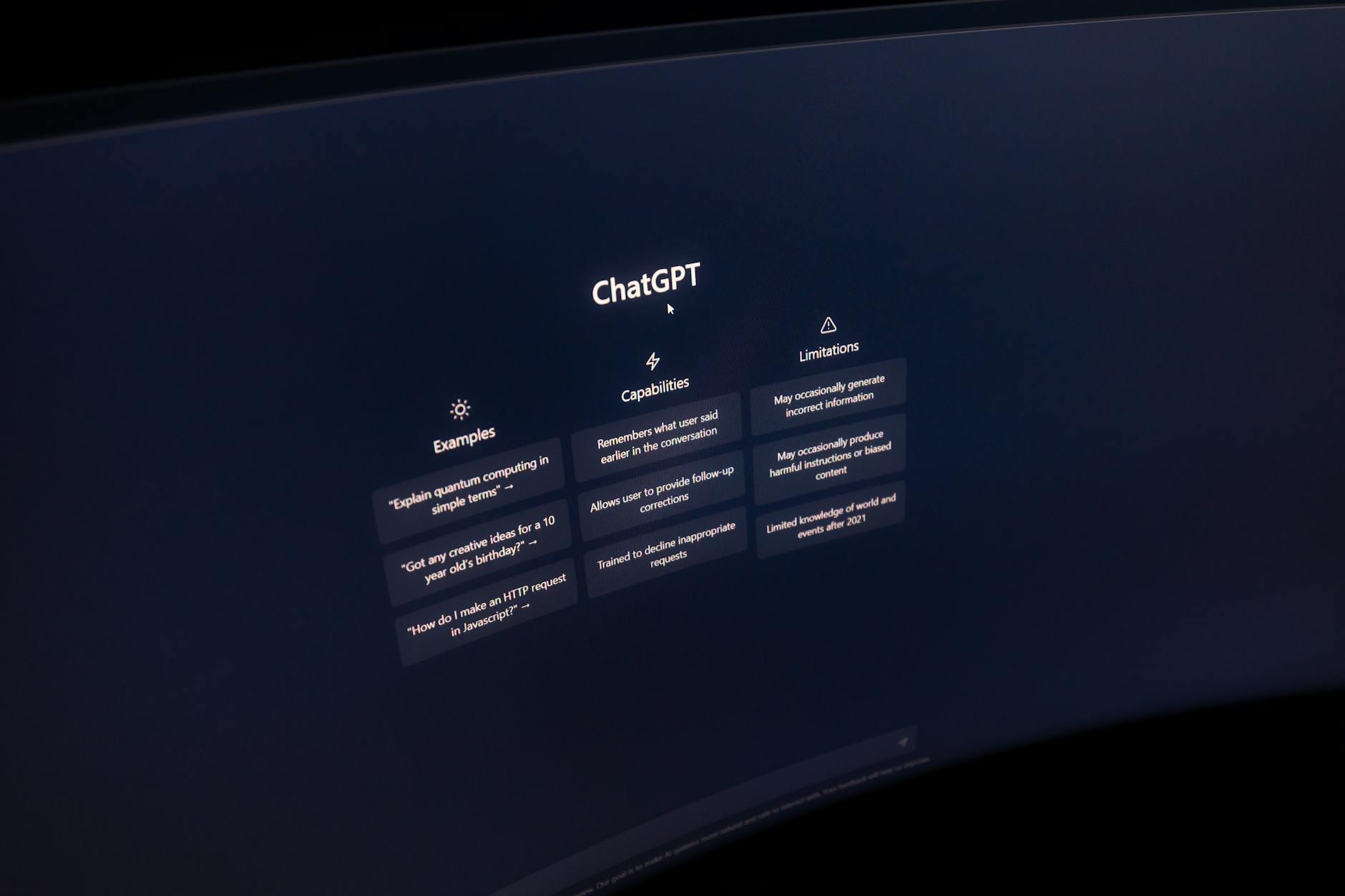
Every day, millions of buyers ask ChatGPT questions that could result in a recommendation for your brand - or your competitor. 'What is the best accounting software for a growing startup?' 'Which email marketing platform works for e-commerce brands?' 'What CRM should a five-person sales team use?' If your brand is not showing up in ChatGPT's answers to these questions, you are invisible at a critical moment in the buyer journey. This guide shows you exactly how to rank on ChatGPT - with a step-by-step framework you can begin implementing this week.
WHY RANKING ON CHATGPT IS DIFFERENT FROM RANKING ON GOOGLE
Google ranks URLs based on technical signals and backlinks. ChatGPT forms recommendations based on its training data and, increasingly, real-time web retrieval. Getting your brand recommended by ChatGPT requires building a strong presence across the sources ChatGPT has learned from - including G2, Reddit, industry publications, and your own well-structured content.
Step 1: Understand How ChatGPT Sources Its Recommendations

Before you can influence ChatGPT's recommendations, you need to understand the mechanics. ChatGPT (specifically GPT-4 and later models) forms brand recommendations through two primary mechanisms.
First, its parametric knowledge - information encoded during training on a vast corpus of internet content. Brands with a strong, consistent presence in high-quality sources before and during ChatGPT's training cutoff benefit from deeper parametric representation. Second, for users with web browsing enabled, ChatGPT can retrieve live web content to supplement its training data. This second mechanism is increasingly important and provides the fastest lever for improving ChatGPT visibility.
The critical implication: you cannot directly submit your brand to ChatGPT. Instead, you influence ChatGPT's recommendations by building a strong presence on the sources it has learned from and continues to retrieve. Your optimization target is the web ecosystem that feeds ChatGPT - not ChatGPT itself.
Step 2: Audit Your Current ChatGPT Visibility
Start by understanding where you currently stand. Open ChatGPT and run these five types of queries, noting whether your brand appears in each:
- Category queries: 'What are the best [product type] tools for [your target customer]?'
- Use-case queries: 'What [product type] should I use to solve [specific problem]?'
- Comparison queries: 'What are the alternatives to [top competitor in your category]?'
- Direct brand queries: 'Tell me about [your brand] - what do they do and who is it for?'
- Sentiment queries: 'What do users say about [your brand]? What are its strengths and weaknesses?'
Record every response. Note: which brands appear and in what order, how your brand is described when it does appear, which competitors are named consistently, and whether the descriptions are accurate and favorable. This baseline audit is the foundation of your ChatGPT ranking strategy.
Step 3: Build Your G2 and Review Platform Foundation
G2, Capterra, and equivalent review platforms are among the most-cited sources in ChatGPT's training data for B2B software and services. ChatGPT has been trained on millions of G2 reviews, category pages, and comparison articles - and those reviews directly shape how it describes and ranks brands when answering recommendation queries.
Action items for review platform optimization:
- Conduct a review gap analysis: How many reviews does your brand have on your primary platform compared to the top 3 brands ChatGPT currently recommends in your category?
- Launch a review generation campaign: Email your 50 most engaged customers with a personal note asking for a specific, detailed G2 review. Provide guidance on what to include - specific use cases, team size, concrete outcomes achieved.
- Respond to all reviews: ChatGPT's training data includes review responses. Active, helpful responses signal brand quality and engagement.
- Target the right G2 category: Ensure your brand is listed in the exact category where ChatGPT recommendation queries for your space are most common.
Step 4: Build a Reddit Presence That ChatGPT Reads
Reddit is one of the most significant sources in ChatGPT's training data. Multiple studies have confirmed that ChatGPT draws heavily on Reddit discussions when forming recommendations, particularly for conversational recommendation queries. Building a credible Reddit presence is one of the highest-leverage single actions available for improving ChatGPT visibility.
The right approach to Reddit for ChatGPT visibility:
- Identify your 5 most relevant subreddits: These are communities where your target customers discuss problems your product solves. Common examples include r/entrepreneur, r/startups, r/marketing, r/SaaS, and category-specific communities.
- Audit existing brand mentions: Search each subreddit for your brand name and category. Are you being discussed? What is the sentiment? Are competitors being recommended over you?
- Contribute genuine value first: Before any brand mentions, spend 2 to 4 weeks answering questions, sharing insights, and contributing to discussions without promoting your brand. Build credibility and karma.
- Answer questions where your product is a genuine solution: When users ask for tool recommendations in your category, provide a genuinely helpful answer that mentions your brand - with context about who it is best for.
- Never spam or astroturf: ChatGPT is trained on the full Reddit context, including user reception. Promotional posts that get downvoted or flagged as spam do not help your ChatGPT visibility - they hurt it.
Step 5: Publish Content That ChatGPT Cites
ChatGPT retrieves and cites content from authoritative web sources. Well-structured, authoritative content on your own domain - and in industry publications - builds the content layer that ChatGPT can directly quote or summarize in its responses.
- Write comprehensive category guides with clear definition blocks: Articles that define your category clearly, answer frequently asked questions, and provide direct comparisons are the type of content ChatGPT is most likely to retrieve and cite.
- Include FAQ sections with schema markup: ChatGPT is trained on FAQ content and retrieves FAQ-structured pages frequently. Every major article should include 3 to 5 clearly formatted FAQ questions.
- Use precise, specific language: Vague marketing language is less likely to be cited than specific, factual descriptions. 'Brandofy tracks brand mentions across ChatGPT, Perplexity, and Gemini' is more citable than 'Brandofy helps brands succeed online.'
- Earn editorial mentions in trusted publications: Coverage in respected industry publications is training data gold - it creates the kind of authoritative third-party validation that ChatGPT treats as high-quality signal.
PRO TIP: The 'Alternatives' Content Strategy
One of the fastest ways to appear in ChatGPT recommendations is to publish thorough 'alternatives to [competitor]' content. When users ask ChatGPT for alternatives to market leaders in your category, ChatGPT frequently retrieves comparison content from the web. A well-structured, genuinely helpful alternatives article can drive ChatGPT citations within weeks of indexing.
Step 6: Optimize Your Brand Entity for ChatGPT
ChatGPT thinks in entities - named organizations, products, and concepts - and builds associations around them. The more clearly and consistently your brand entity is defined across the web, the more confidently ChatGPT can recommend and describe you.
- Standardize your brand name everywhere: Use exactly the same brand name, product names, and company name across your website, press releases, review profiles, and editorial mentions. Inconsistency creates ambiguity for language models.
- Define your category clearly and consistently: ChatGPT needs to know what category you belong to. Use consistent category language - 'AI visibility platform', 'brand monitoring tool', 'AEO software' - across all your owned and earned content.
- Maintain a clear, consistent founder and team presence: For B2B brands especially, founder LinkedIn profiles, speaking engagements, and personal thought leadership content contribute to the overall entity strength of the brand in ChatGPT's knowledge base.
Step 7: Track, Measure, and Iterate
ChatGPT's outputs are not static. Model updates, new training data, and shifts in web content all affect how ChatGPT represents your brand. A ChatGPT ranking strategy without ongoing measurement is a strategy without feedback - you cannot improve what you do not track.
Use a dedicated AI visibility platform like Brandofy to track your ChatGPT citation frequency across your core query set, monitor changes in how ChatGPT describes your brand, compare your ChatGPT visibility against competitors, and get alerts when significant changes occur. This tracking data tells you which tactics are working and where your next highest-leverage investment should be.
Frequently Asked Questions
How long does it take to start appearing in ChatGPT recommendations?
For the retrieved knowledge layer (web-enabled ChatGPT), improvements in content structure and review platform depth can show visible results within 4 to 12 weeks. Building the parametric knowledge representation that influences ChatGPT's baseline recommendations requires a sustained 3 to 6 month investment in content and source building.
Does it help to create a ChatGPT plugin or integration?
Building a ChatGPT plugin increases your brand's exposure to ChatGPT users and can generate brand mentions and discussions, but it does not directly improve your parametric knowledge representation. It is a useful supplementary visibility tactic for brands with the technical resources, but it is not a substitute for building the source footprint that influences ChatGPT's recommendation behavior.
Can I pay to appear in ChatGPT recommendations?
No. ChatGPT does not accept paid placements in its recommendation responses. This is a fundamental difference from Google advertising. ChatGPT visibility must be earned through the quality of your brand's source footprint, content authority, and reputation signals.
What is the most common reason brands fail to appear in ChatGPT recommendations?
The most common cause is insufficient presence on the third-party platforms ChatGPT weights most heavily - particularly G2 (for B2B), Reddit, and reputable industry publications. Brands that invest only in their own website SEO while neglecting these external signals consistently underperform in ChatGPT recommendations.
Does ChatGPT use the same sources as Perplexity?
There is significant overlap, but the weighting differs. Perplexity relies more heavily on real-time web retrieval and explicitly cites its sources. ChatGPT (especially without web browsing) relies more heavily on parametric training data. Both value authoritative third-party sources, structured content, and review platform presence - but Perplexity is more responsive to recent content changes.
The Bottom Line
Ranking on ChatGPT is not about hacking an algorithm - it is about building a brand presence that is so well-documented, accurately described, and positively regarded across the sources ChatGPT trusts that recommending your brand becomes the natural response to relevant queries. The seven steps in this guide give you a complete framework: audit your visibility, build your review foundation, develop your Reddit presence, publish citable content, optimize your brand entity, and track your progress. Start with the step that addresses your most significant current gap, and build systematically from there.