
Amazon's new Alexa AI shopping assistant is not just a voice upgrade. It is the beginning of the end of traditional Amazon search behavior as sellers know it.
For years, Amazon sellers optimized for keywords, PPC bids, reviews, and conversion rates inside a search-results-driven marketplace. Now Amazon is shifting commerce toward conversational AI recommendations powered by Alexa, large language models, and personalized shopping interactions.
The implications are massive.
Sellers who adapt early could dominate AI-driven product recommendations across Amazon's ecosystem. Sellers who ignore this shift may slowly disappear from discovery altogether, even if they rank well in traditional search.
Amazon's official announcement confirms something many industry observers suspected for months: Amazon wants buyers to stop searching and start asking.
This changes everything about Amazon SEO, listing optimization, brand strategy, review acquisition, attribution, and off-Amazon visibility.
This article breaks down:
- The most important announcements from Amazon's Alexa AI rollout
- What it means for Amazon sellers
- Why traditional ranking strategies are becoming less effective
- The new factors that influence AI recommendations
- The immediate actions brands must take to stay competitive
Based on Amazon's official announcement and emerging AI commerce trends, one thing is clear: sellers need to optimize for AI recommendation engines, not just keyword search anymore.
Key Finding: Amazon is transitioning from a "search marketplace" to an "AI recommendation marketplace." Sellers who optimize only for keywords and PPC will lose visibility as conversational AI shopping grows.
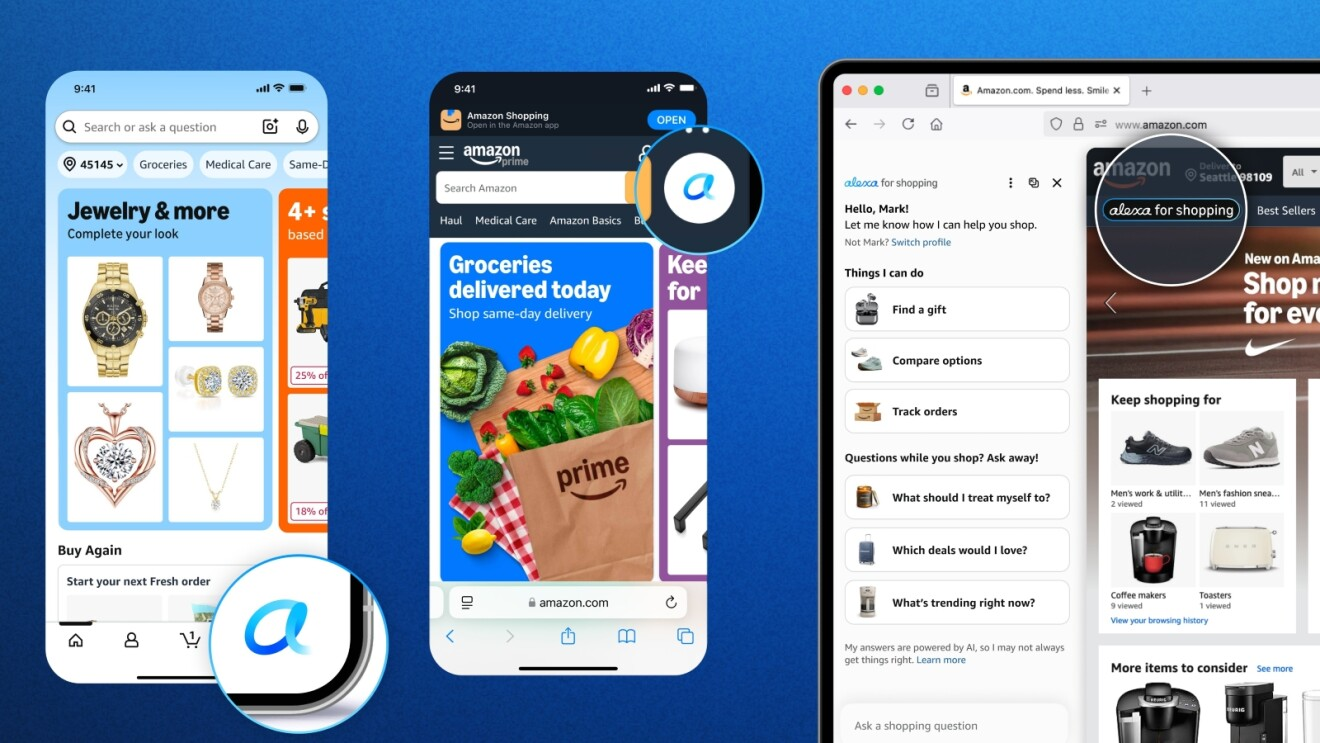
What Amazon Announced About Alexa's New AI Shopping Experience
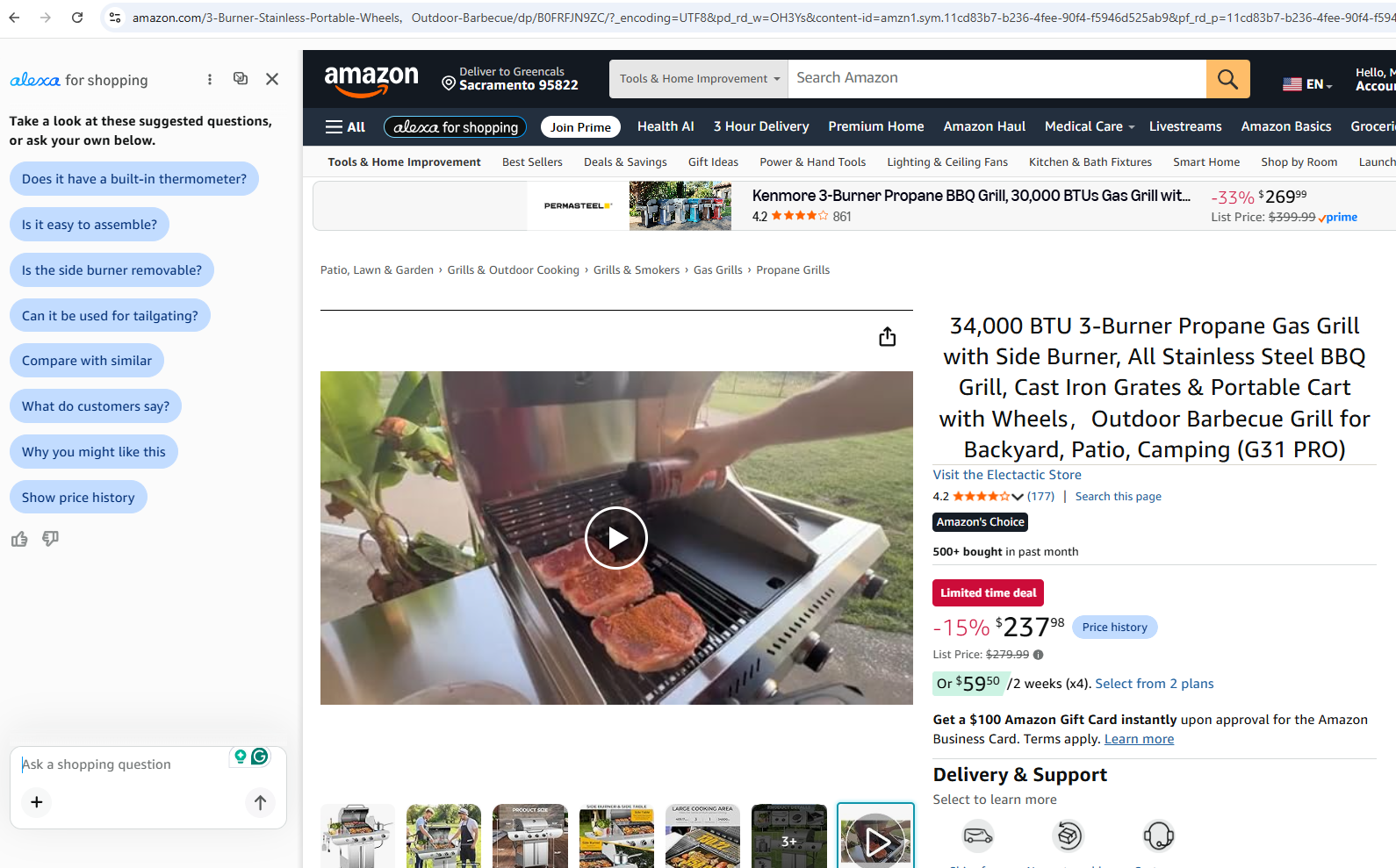
According to Amazon's official announcement, Alexa is becoming a much more advanced AI shopping assistant powered by generative AI.
Amazon highlighted several major upgrades.
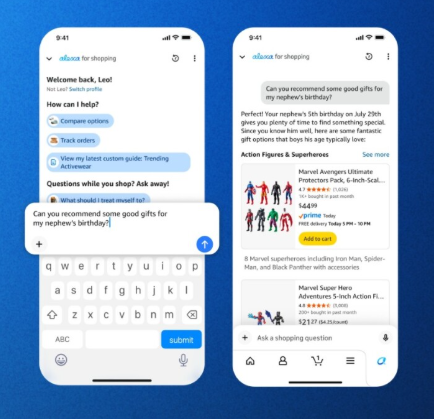
1. Alexa Can Now Handle Conversational Shopping Queries
Instead of searching with short keywords like:
- "protein powder"
- "dog bed"
- "wireless earbuds"
Users can now ask natural questions such as:
- "What's the best protein powder for muscle gain with low sugar?"
- "Find me a durable dog seat cover for large dogs."
- "Which headphones are best for travel and battery life?"
This matters because conversational AI systems interpret intent differently from traditional Amazon search algorithms.
Keyword matching becomes less important than:
- contextual relevance
- customer sentiment
- product reputation
- review themes
- trust signals
- authority
- buyer satisfaction patterns
Amazon is effectively moving toward an AI-mediated shopping experience where Alexa chooses which products deserve visibility.
2. Alexa Can Explain Why It Recommends Products
Amazon emphasized that Alexa can summarize reviews, explain product differences, and provide reasoning behind recommendations.
This is critical.
Traditional Amazon search mostly rewarded:
- keyword relevance
- sales velocity
- advertising spend
- conversion rates
AI shopping assistants reward:
- clear product differentiation
- structured information
- positive review sentiment
- feature clarity
- consumer trust
The AI must "understand" the product before it can recommend it confidently. That creates a new optimization layer most sellers are completely unprepared for.
3. Alexa Is Becoming More Personalized
Amazon says Alexa will tailor recommendations based on user preferences, shopping history, behavior patterns, and contextual needs.
This means generic listings become less effective over time. Brands with strong positioning, niche authority, consistent branding, and specific use-case dominance will outperform broad commodity sellers.
The future Amazon winner is not necessarily the seller with the biggest PPC budget. It may be the seller with the clearest brand identity and strongest semantic relevance for specific shopping intents.
4. Alexa Can Compare Products Automatically
Amazon's AI can now evaluate products across multiple dimensions and summarize differences for buyers. This shifts the competitive battlefield dramatically.
In traditional search, buyers manually compare listings and sellers compete for clicks. In AI commerce, the AI compares products before the customer even sees the listings.
That means sellers must optimize for comparison readiness, feature clarity, structured differentiation, review consistency, and reputation signals. If your product is hard to understand, hard to compare, or poorly differentiated, Alexa may simply skip recommending it.
Why This Is a Bigger Shift Than Most Amazon Sellers Realize
Most Amazon sellers still think in terms of ranking keywords, lowering ACOS, improving CTR, and maximizing PPC efficiency. Those tactics still matter, but they are no longer sufficient.
Amazon is gradually replacing "search-first commerce" with "AI-first commerce." That changes the discovery layer completely.
Historically, buyers searched keywords, browsed results, compared listings, read reviews, then chose products.
In the new AI shopping model, buyers ask Alexa, Alexa interprets intent, Alexa narrows choices, Alexa explains recommendations, and buyers choose from AI-selected products.
The filtering power moves from the customer to the AI assistant. That means visibility itself changes.
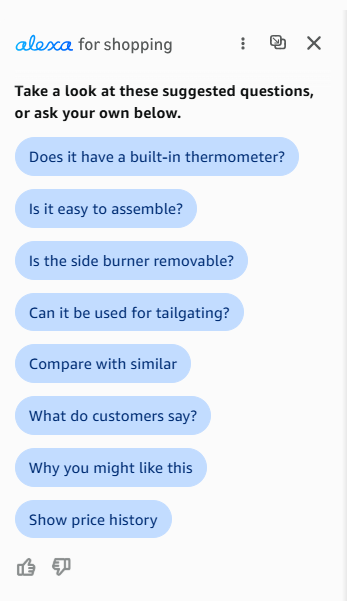
The New Amazon Ranking Stack for AI Commerce
The old Amazon ranking formula prioritized keyword relevance, sales velocity, review quantity, conversion rate, and PPC performance. The new AI recommendation stack likely includes additional layers.
| Traditional Amazon Signals | AI Commerce Signals |
|---|---|
| Keyword density | Semantic clarity |
| PPC velocity | Review sentiment quality |
| Click-through rate (CTR) | Product understanding |
| Sales history | Feature differentiation |
| Search rank | Conversational relevance |
| Bid aggressiveness | Brand trust |
| Conversion rate | Use-case authority |
This is one of the most important strategic shifts in Amazon history.
Why Review Sentiment Becomes Far More Important
Alexa's shopping assistant relies heavily on review summarization. That means review quality now matters more than review quantity alone.
If customers repeatedly mention durability, comfort, battery life, quality issues, sizing problems, or misleading claims, Alexa can surface those themes instantly.
A product with 10,000 reviews, poor sentiment consistency, and unclear positioning may lose to a product with 2,000 reviews, stronger thematic consistency, and clearer use-case dominance. This changes how sellers should approach reviews entirely.
Sellers Need to Optimize for "Review Narrative"
The goal is no longer just more reviews and a higher star rating. The goal becomes consistent review themes, clear customer language, repeated benefit mentions, and strong use-case alignment.
For example, if you sell a dog seat cover, your reviews should repeatedly reinforce:
- "easy to clean"
- "great for large dogs"
- "waterproof"
- "durable during road trips"
Those repeated semantic patterns help AI systems understand what your product truly excels at. This is the same review-narrative discipline we cover in our Answer Engine Optimization guide for Amazon sellers.
Why Commodity Products Will Struggle
AI shopping assistants naturally compress choice. Instead of showing buyers 400 similar products, Alexa may recommend only a handful. That creates a huge problem for generic products.
Commodity sellers with weak branding, no differentiation, copycat listings, and generic positioning will likely lose visibility over time. Conversational AI rewards specificity.
The winners will increasingly be category specialists, premium brands, products with unique positioning, and brands with strong customer language alignment.
This is extremely important for private-label sellers. The "launch generic product + run PPC" strategy becomes much weaker in an AI commerce environment.
Off-Amazon Visibility Will Start Influencing Amazon Visibility
This is where the shift becomes even more interesting.
Large language models learn from reviews, blogs, Reddit, YouTube, TikTok, forums, and external mentions. Amazon is unlikely to rely only on listing data forever.
Brands that are discussed positively across the internet gain stronger semantic authority. This mirrors what is already happening in ChatGPT, Gemini, Perplexity, and Google AI Overviews.
Research from Princeton's GEO study found that adding citations and external authority signals dramatically improves AI visibility. That means Amazon sellers now need to think beyond Amazon itself. If you're new to this, start with our Reddit strategy for getting your brand cited by AI models.
The New AI Visibility Flywheel
The emerging flywheel looks like this:
- Better products create stronger reviews
- Strong reviews create clearer AI understanding
- Better AI understanding increases recommendations
- More recommendations increase sales velocity
- More customers create more review data
- External content reinforces brand authority
- AI systems gain greater confidence recommending the brand
This creates compounding advantages for strong brands.
The 7 Immediate Actions Amazon Sellers Need to Take
1. Rewrite Listings for Conversational AI
Most Amazon listings are still optimized like it is 2018. That is a problem. Sellers should rewrite listings to answer natural language questions, explain use cases clearly, reinforce product differentiation, simplify feature understanding, and align with conversational shopping prompts.
Weak listing copy: "Premium ergonomic office chair with lumbar support."
AI-optimized listing copy: "Designed for people who sit 8+ hours daily and need lower back support during long work sessions."
The second version gives AI systems contextual meaning. For a full walkthrough, see how to optimize your Amazon listings for Alexa AI overviews.
2. Analyze Review Themes Aggressively
Review mining becomes one of the highest-leverage activities in AI commerce. Sellers should identify recurring praise patterns, repeated complaints, dominant benefit language, emotional triggers, and common use cases.
Then reinforce winning themes across listing copy, images, A+ content, external marketing, packaging, and influencer campaigns.
3. Build Stronger Brand Positioning
Generic positioning is becoming dangerous. Brands need to own a specific audience, a specific use case, and a specific product narrative.
- Weak positioning: "High-quality supplements."
- Strong positioning: "Clean protein supplements for busy professionals who train early mornings."
Specificity helps AI systems categorize and recommend products more effectively.
4. Create More External Content About Your Brand
Amazon sellers can no longer operate entirely inside Amazon. Brands need Reddit discussions, blog mentions, creator reviews, TikTok content, YouTube comparisons, independent articles, and UGC content.
The more external language exists around your brand, the easier it becomes for AI systems to understand and recommend it. This is one reason influencer and affiliate marketing will become increasingly important.
5. Optimize Product Images for AI Understanding
Visual clarity matters more in AI commerce. Images should communicate use case, audience, environment, differentiation, and product outcome. AI systems increasingly analyze visual information alongside text. Complex or confusing imagery reduces recommendation confidence.
6. Reduce Negative Review Clusters Immediately
Negative review patterns become amplified in AI summaries. If buyers repeatedly mention "cheap quality," "poor battery," "misleading sizing," or "hard to assemble," Alexa can summarize those weaknesses instantly.
Sellers should aggressively identify and eliminate recurring product complaints, misleading expectations, fulfillment issues, and packaging problems.
7. Start Tracking AI Visibility Now
Most brands currently track keyword rankings, TACOS, ACOS, CTR, and conversion rate. Soon they will also need to track:
- AI recommendation visibility
- AI share of voice
- Conversational query presence
- Review sentiment mapping
- AI comparison positioning
This will become a major new software category inside Amazon commerce. Our deep dive on the best AI visibility platforms in 2026 compares the current options.
What This Means for Amazon PPC

PPC is not disappearing. But its role changes. Historically, PPC helped products gain visibility. In AI commerce, PPC may increasingly help products generate review velocity, reinforce behavioral data, and accelerate AI confidence signals.
The long-term risk is that AI assistants reduce browsing behavior altogether. Fewer browsing sessions could eventually reduce the total number of ad impressions available. That makes organic AI recommendation visibility even more valuable.
Why Early Adopters Have a Massive Advantage
AI systems create winner-take-most dynamics. Once a product becomes a trusted recommendation source, it accumulates more clicks, more purchases, more reviews, more authority, and more behavioral reinforcement. That compounds over time.
The brands that adapt first could dominate conversational commerce categories for years. This is similar to early Amazon SEO advantages in 2015, early TikTok organic advantages in 2020, and early Shopify DTC advantages in 2017. Most sellers will react too late.
What Amazon Sellers Should Expect Next
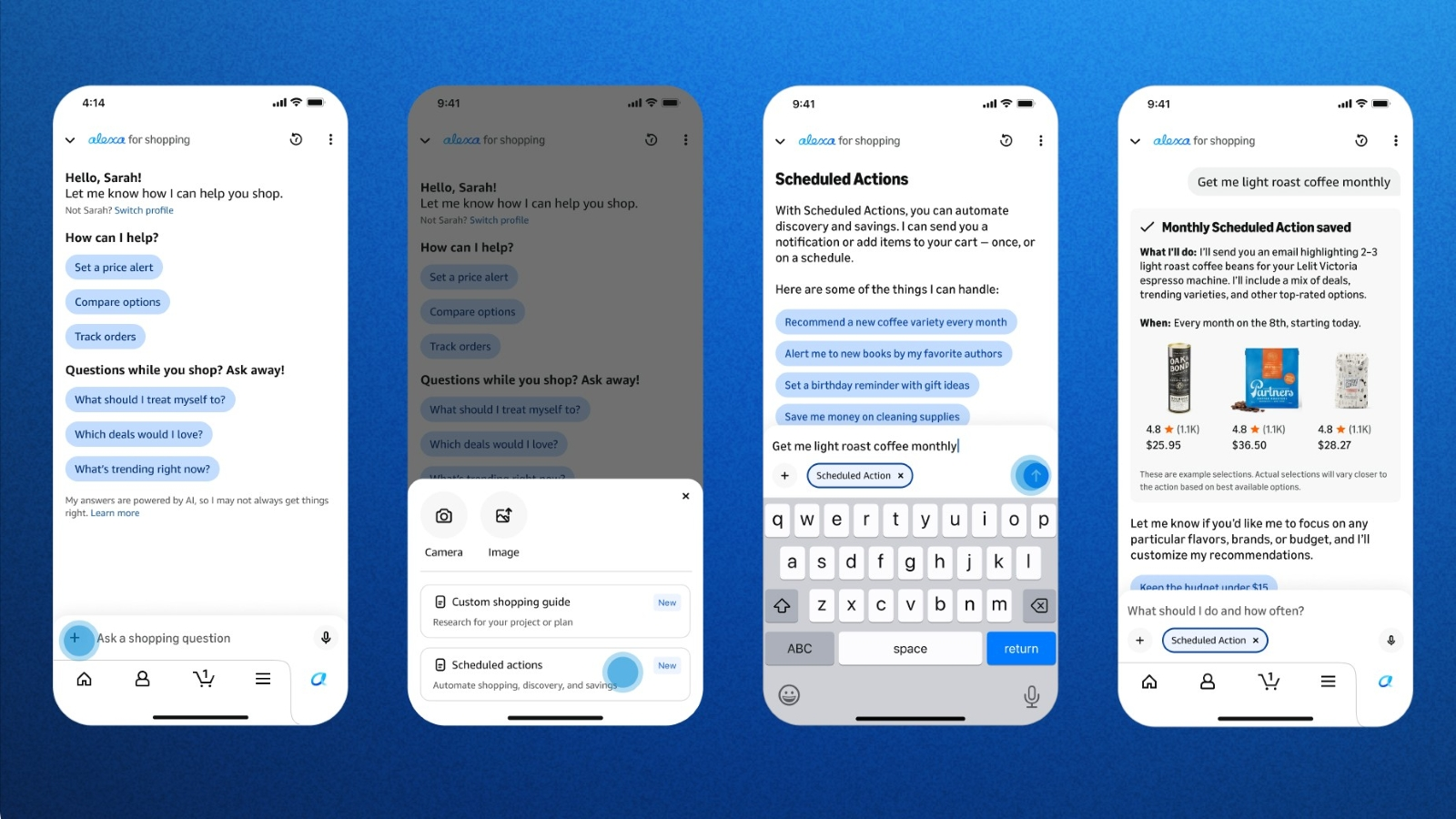
Over the next 24 months, expect Amazon to expand conversational product discovery, AI-generated comparisons, review summarization, personalized recommendations, voice commerce, and proactive shopping suggestions.
Expect Rufus, Alexa, and Amazon AI shopping experiences to merge more deeply. Eventually, Amazon may become less of a "search engine with products" and more of an "AI shopping advisor." That changes how products get discovered forever. For more context, read the real reason Amazon merged Rufus and Alexa.
Frequently Asked Questions
Will traditional Amazon SEO still matter?
Yes, but keyword optimization alone becomes less effective over time. Sellers must also optimize for semantic understanding, review sentiment, and AI recommendation quality.
Does this mean PPC is becoming less important?
PPC still matters for visibility and sales velocity. But long-term competitive advantage may shift toward AI recommendation dominance rather than pure ad spend.
Why are reviews becoming more important with Alexa AI?
Alexa summarizes reviews and extracts common themes. Strong thematic consistency helps AI systems understand product strengths and recommend products confidently.
Will external brand mentions influence Amazon AI recommendations?
Very likely. AI systems increasingly use multi-source understanding across reviews, content, social discussions, and brand mentions to evaluate authority and relevance.
What types of Amazon sellers benefit most from this shift?
Brands with strong positioning, differentiated products, loyal customers, and clear use-case authority are best positioned to win in AI commerce.
The Bottom Line
Amazon's Alexa AI shopping assistant marks the beginning of a major transition from search-driven commerce to AI-guided commerce. This is not a small feature update.
It fundamentally changes how products are discovered, how buyers evaluate products, how recommendations are generated, and how brands earn visibility.
The sellers who win over the next five years will not simply be the best at Amazon PPC or keyword ranking. They will be the brands that AI systems understand, trust, and confidently recommend.
That requires stronger positioning, clearer product narratives, better reviews, external authority, conversational optimization, and semantic relevance.
The shift has already started. Most sellers still do not realize how significant it is. The smart brands are adapting now.